
Pressure injuries don't appear without warning, they are developed gradually as unrelieved weight rests on the same bony areas. If you rely on a wheelchair full-time or for extended periods each day, a real prevention plan is one of the most important things you can put in place.
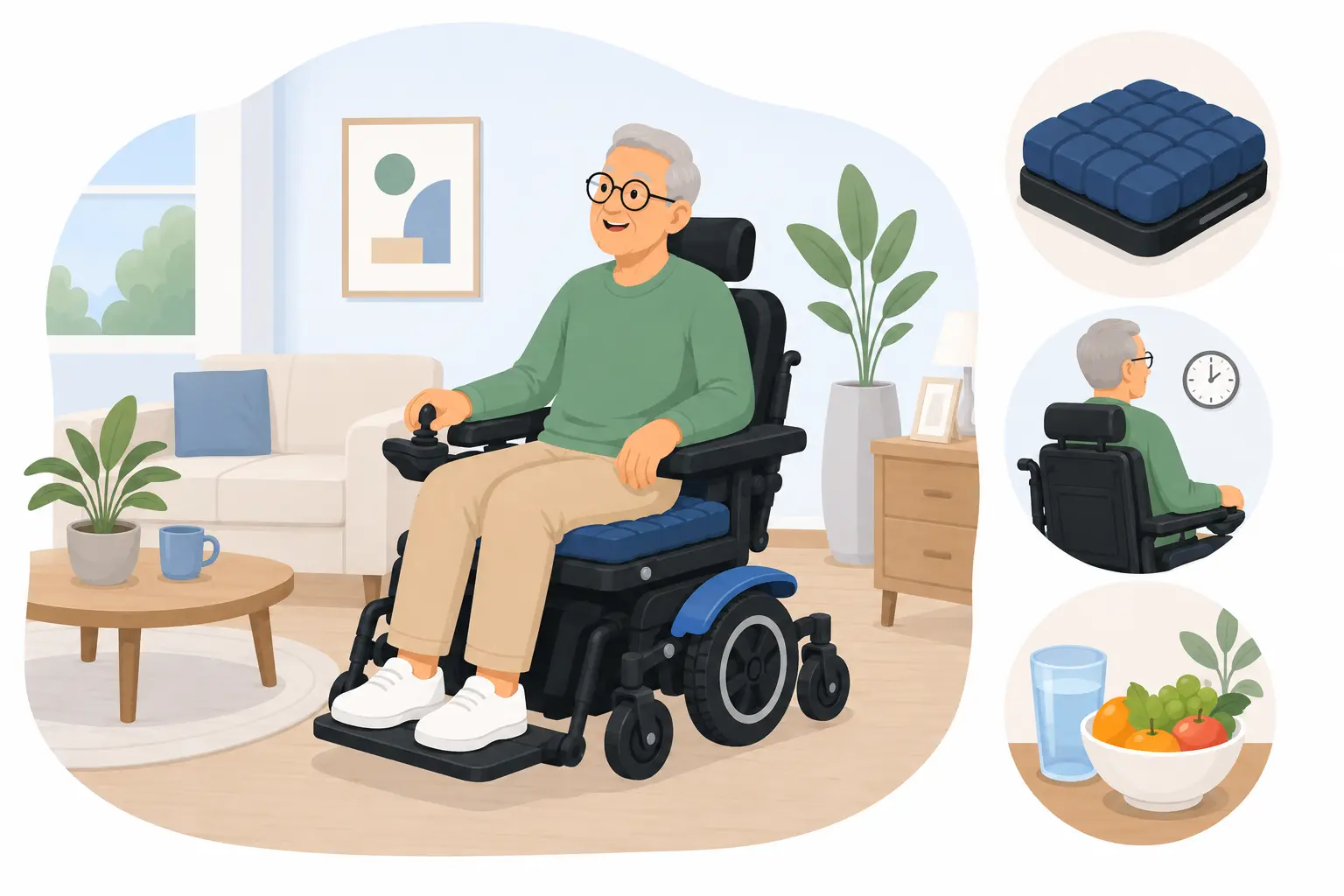
Pressure injuries are developed gradually over time as unrelieved weight rests on the same bony areas. If you rely on a wheelchair full-time or for extended periods each day, whether due to a spinal cord injury, neurological condition, or post-surgical recovery, skin breakdown is a real clinical risk that deserves a real prevention plan. The good news is that pressure injuries are largely avoidable.
The right combination of equipment, repositioning habits, and daily care can keep your skin intact through even the most demanding days. This guide walks through five proven areas of pressure injury prevention: understanding why seated pressure accumulates where it does, selecting the right equipment, optimizing your seating setup, building a consistent repositioning routine, and best skin maintenance practices.
When you sit for extended periods, your body weight concentrates on a very small surface area — primarily the tissue sitting between your bones and the cushion. Unlike standing or lying down, seated posture focuses pressure directly onto a few specific bony prominences. That sustained compression restricts blood flow to the underlying tissue, cutting off the oxygen and nutrients cells need to survive. Once circulation is blocked long enough, cell death begins. Clinicians call the result a pressure injury, pressure ulcer, or decubitus ulcer.
The highest-risk sites for wheelchair users are the ischial tuberosities (commonly called the sit bones), the sacrum and coccyx at the base of the spine, the greater trochanters on the outer hips, and the heels when legs rest on footrests. These areas have bone very close to the skin surface with minimal tissue in between, which is exactly why pressure concentrates there. Clinical guidelines consistently identify these as the sites where early skin breakdown most commonly begins.
Limited sensation or mobility, as seen commonly with spinal cord injury or multiple sclerosis, removes the body's natural warning system: the discomfort that prompts a person without impairment to shift position. Older or thinned skin tolerates sustained pressure less than younger tissue does. Poor nutrition, low hydration, and incontinence all weaken skin integrity and make breakdown more likely. A seating setup that doesn't match the user's body adds mechanical stress on top of all of these factors, which is why customized equipment matters so much.
The cushion is the single most consequential equipment decision a wheelchair user makes for skin protection. A well-chosen cushion reduces peak interface pressure at the ischial tuberosities and sacrum significantly. The wrong cushion leaves those areas fully exposed to sustained loading. Cushion selection is not a one-size-fits-all purchase; it needs to account for your diagnosis, body weight, seated posture, and how you use your chair throughout the day. At Feroz Medical Supplies, our ATP evaluations in Southern California ensure every client is matched to the exact cushion their body and chair require.
Air-cell cushions, like ROHO-style designs, have the most consistent evidence for reducing seated interface pressure across studies and systematic reviews. In direct comparisons, dual-compartment air cushions outperformed low-profile air, gel, and foam options for both pressure redistribution and total contact area. The mechanism is straightforward: air cells conform to the body's exact contours, distributing weight across the entire seating surface rather than concentrating it only in the bony areas.
Gel cushions reduce interface pressure compared with sitting without a cushion but generally underperform air cushions in direct clinical comparisons. Foam cushions provide some pressure reduction and are often useful for postural stability, but they are the least effective option when interface pressure reduction is the primary goal. Hybrid cushions combine materials to balance multiple needs, but they perform better for controlling temperature and moisture at the skin surface rather than for maximum pressure redistribution. Choosing among these options means weighing several factors at once: pressure relief, postural support, moisture control, and the user's daily routine.
An Assistive Technology Professional doesn't just recommend a cushion based on diagnosis. They assess seated posture, weight distribution, skin condition, transfer technique, and functional needs before prescribing. That complete picture determines which cushion will actually perform well for a specific person in their specific chair. Many insurers, including Medicare under specific coverage criteria, may cover clinically prescribed cushions when documentation supports medical necessity.
A crucial step in ensuring you are in good shape in preventing pressure sores in a wheelchair is making sure the chair itself is properly configured. Chair setup directly affects how pressure is distributed: the width of the seat, the height of the footrests, and ensuring the chair has tilt and recline features all change where and how your body weight loads onto the seating surface. Getting the configuration right amplifies everything the cushion is designed to do.
Tilt-in-space technology rotates the entire seat unit backward, shifting body weight from the bottom toward the back without requiring any physical effort from the user. This is especially critical for wheelchair users with limited arm strength, shoulder pain, or poor trunk control who cannot safely perform manual pressure relief maneuvers. Powered recline extends the backrest angle and can be used in combination with tilt for more complete offloading. For the right candidate, these chair features are not optional comfort upgrades — they are pressure injury prevention tools.
Footrest height directly influences how much weight the thighs bear relative to the ischial tuberosities. If set too low, footrests allow the thighs to hang, which increases ischial loading. When positioned too high, they push the pelvis into a posterior tilt, shifting pressure onto the sacrum. A neutral pelvis distributes load more evenly and reduces concentrated sacral pressure. A professional seating evaluation addresses both pelvic alignment and footrest height — two of the most frequently corrected issues clinicians encounter.
The evidence-based standard for seated pressure relief is clear: perform a pressure relief maneuver every 15 to 30 minutes while in your wheelchair, holding each position for at least 1 to 2 minutes when possible. The challenge isn't knowing what to do — it's doing it consistently throughout a full day.
Set a phone, smartwatch, or dedicated timer to alert you every 20 minutes as a starting point, then adjust based on your clinician's guidance and your individual risk level. The first few weeks feel disruptive; after a few months, the habit becomes automatic.
The side lean is the most practical option for many manual wheelchair users. Swing away one armrest if needed and lean toward the opposite side until one sit bone clearly clears the cushion. Hold the position for 30 to 90 seconds, return upright, and repeat on the other side.
The forward lean involves bending your chest toward your knees until the ischium is unloaded. This technique requires good trunk control and the ability to return to upright reliably, so it works best for users with stable core strength. Hold for 30 to 90 seconds before coming back up.
The push-up lift provides the most complete offloading for users with sufficient upper extremity strength. Lock the wheels, place hands on armrests or push rims, straighten your elbows fully until your body clears the cushion, and hold for 15 to 60 seconds. This technique places significant demand on the shoulders, so users with shoulder pain should discuss alternatives with their rehab team.
For complex rehab power wheelchair users, it's an easier process. Tilt first and then recline if both functions are available. Hold the offloaded position for at least 1 to 2 minutes. This will allow blood to properly flow back to previously compressed tissues.
A consistent inspection catches Stage 1 pressure injuries before they progress. Stage 1 injuries are fully reversible with prompt offloading. Stage 3 and Stage 4 injuries require wound care, extended recovery time, and can lead to serious complications. The few minutes spent on a daily skin check are among the highest-value habits in your prevention plan.
At minimum, check the skin over your tailbone, hip bones, and heels. Look for redness that does not fade when pressure is briefly removed, warmth, firmness or unusual hardness under intact skin, swelling, or any open area. For people with darker skin tones, visible redness may be absent entirely — focus on temperature changes, differences in skin texture (firm, boggy, or tight areas), and any localized discomfort or tenderness as your primary detection signals.
Stage 1 pressure injuries present as intact skin with nonblanchable redness. This is your window to act — offload the area immediately and contact your care team. Waiting until the skin opens means recovery time measured in weeks or months, not days.
Clean skin promptly after any incontinence episode using a gentle, pH-balanced, unscented cleanser. Harsh or alkaline soaps disrupt the skin's protective barrier and increase vulnerability to breakdown. Apply a light, unscented moisturizer daily to keep skin supple, focusing on areas prone to dryness. When incontinence or persistent sweating is a concern, use a barrier product containing dimethicone, petrolatum, or zinc oxide to protect at-risk areas from moisture exposure. The goal is clean, dry, intact skin at the end of every day.
Skin integrity isn't only a surface issue. Tissue that is malnourished or dehydrated has less structural resilience and heals more slowly once damage starts. Proper nutrition and hydration are foundational components of any pressure injury prevention plan, particularly for older adults, people with chronic illness, and anyone with limited appetite or absorption concerns.
Adults at elevated risk of pressure injuries generally benefit from approximately 1.25 to 1.5 grams of protein per kilogram of body weight per day, along with roughly 30 to 35 calories per kilogram of body weight daily — targets supported by clinical nutrition guidelines for pressure injury prevention. Protein provides the building blocks for tissue repair and supports the structural integrity of the skin itself. A practical hydration starting point is approximately 1 milliliter of fluid per calorie consumed daily, adjusted for clinical status and any additional losses. Anyone with a pre-existing pressure injury, significant malnutrition, or poor oral intake should be referred to a registered dietitian for a tailored nutrition plan.
Moisture from urine or stool softens skin and dramatically lowers its resistance to pressure-related breakdown, making incontinence a compounding risk factor rather than a separate concern. A structured response includes cleaning affected areas promptly after each episode, changing absorbent briefs or pads before skin becomes saturated, and applying a barrier cream to at-risk zones consistently. For caregivers managing this on behalf of someone else: moisture management is not optional when incontinence is present. It is a direct component of pressure injury prevention.
Preventing pressure sores while seated in a wheelchair is a layered system, not a single fix. The right cushion, a correctly configured chair, and a consistent repositioning schedule each contribute independently. Add daily skin monitoring and adequate nutrition, and together they create protection that holds up across long days and changing conditions.
The single highest-leverage step you can take is working with a qualified complex rehab wheelchair provider - one who carries out proper seating evaluations and connects you with skilled ATPs to identify your specific pressure risks, prescribe the right cushion, and configure your wheelchair to protect your skin every day.
At Feroz Medical Supplies in Los Angeles, our experienced team and ATPs conduct thorough seating evaluations and manage the entire process — from equipment selection through insurance coordination, in-home delivery, and follow-up care. We work with Medicare and other major insurance plans. Contact our team to get started →